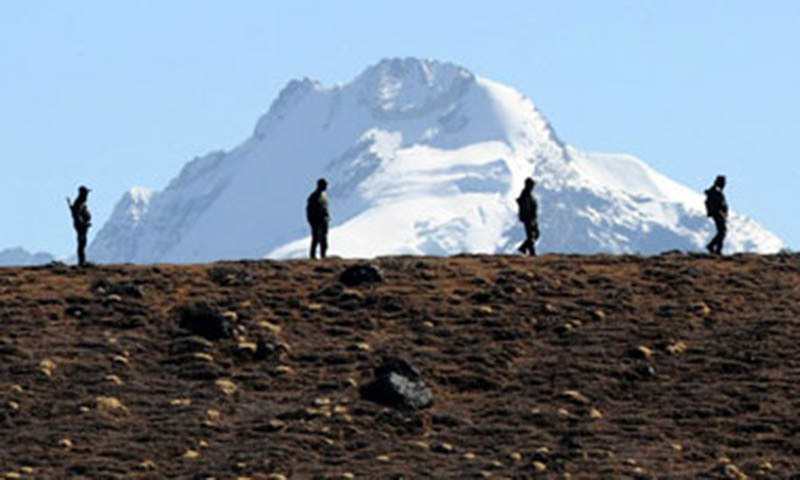
Asian regional superpowers India and China share a long history of mistrust and conflict along their lengthy border, and tensions flared up this week in a deadly clash between troops.
The world’s two most populous nations and nuclear-armed neighbours have never even agreed on the length of their “Line of Actual Control” frontier, which straddles the strategically important Himalayan region.
Recent decades have seen numerous skirmishes along the border, including a brief but bloody war in 1962.
Here are some key dates:
Beijing has never recognised the 1914 boundary, known as the McMahon Line, and currently claims 90,000 square kilometres (34,750 square miles) of territory — nearly all of what constitutes India’s Arunachal Pradesh state.
The border dispute first flared up during a visit by India’s first prime minister Jawaharlal Nehru to Beijing in 1959.
Nehru questioned the boundaries shown on official Chinese maps, prompting Chinese Premier Zhou Enlai to reply that his government did not accept the colonial frontier.
1962 Sino-Indian War
Chinese troops poured over the disputed frontier with India in 1962 during a row over the border’s demarcation. It sparked a four-week war that left thousands dead on the Indian side before China’s forces withdrew.
Beijing retained Aksai Chin, a strategic corridor linking Tibet to western China. India still claims the entire Aksai Chin region as its own, as well as the nearby China-controlled Shaksgam valley in northern Kashmir.
1967 Nathu La conflict
Another flashpoint was Nathu La, India’s highest mountain pass in northeastern Sikkim state, which is sandwiched between Bhutan, Chinese-ruled Tibet and Nepal. During a series of clashes, including the exchange of artillery fire, New Delhi said some 80 Indian soldiers died and counted up to 400 Chinese casualties.
1975 Tulung La ambush
This skirmish was the last time shots were officially reported to have been fired across the disputed border.
Four Indian soldiers were ambushed and killed along the dividing line in Arunachal Pradesh.
New Delhi blamed Beijing for crossing into Indian territory, a claim dismissed by China.
2017 Doklam plateau stand-off
India and China had a months-long high-altitude standoff in Bhutan’s Doklam region after the Indian army sent troops to stop China from constructing a road in the area.
The Doklam plateau is strategically significant as it gives China access to the so-called “chicken’s neck” — a thin strip of land connecting India’s northeastern states with the rest of the country.
It is claimed by both China and Bhutan, an ally of India. The issue was resolved after talks.
2020 Ladakh confrontation
Tensions have boiled over again after several Indian and Chinese soldiers were injured in a high-altitude fist fight on the border at Sikkim state in early May.
Indian officials said that within days, Chinese troops encroached over the demarcation line further west in Ladakh region and India then moved in extra troops to opposite positions.
Last week, both countries said they would peacefully resolve the face-off after a high-level meeting between army commanders.
But on June 15, 2020, India said three of its soldiers were killed in a violent clash in the strategically important Galwan Valley on the Himalayan frontier.
Comments
Post a Comment